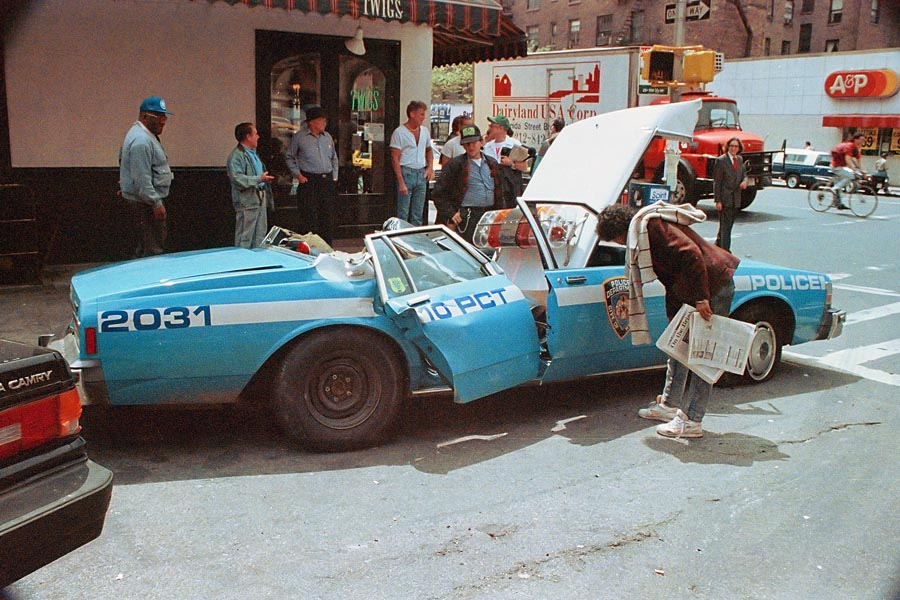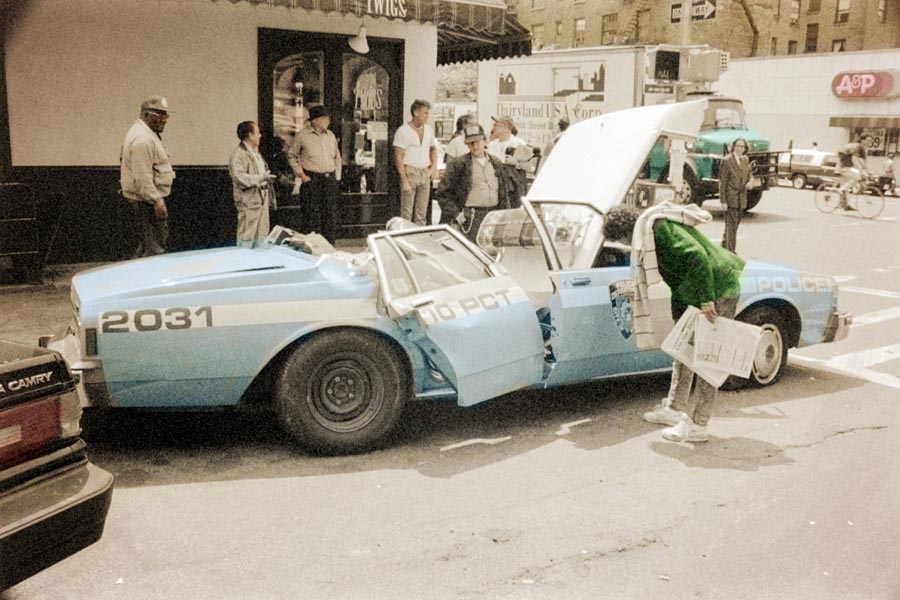
Rushes are not encouraged but are available. Unlike a conventional photo lab that deals with larger volumes of a single film format of only one process type, Film Rescue is processing smaller volumes of film, multiple formats and has 10 unique processes. This creates the need to process in batches -- first completing the processing of all film in house before moving onto scanning and transferring. To break from this cycle is not always possible please contact us if you wish to arrange for rush processing.
Rush Processing Charges |
|
Still Film |
200.00 plus all other charges |
Movie Film |
600.00 plus all other charges |
Yes! There are a small handful of other labs out there that do many of the same services as we do. We encourage our customers to shop around and choose who they feel best provides for their needs. Here they are, in no particular order:
When we are deciding whether to scan or not scan a client's film we are doing this upon visual inspection of the processed negative. Often times it is difficult to tell what the end quality will be without scanning and enhancing the negative. We therefore will continue with scanning and enhancing any film that we see anything on, whether that be a person, animal or object. We do not want to be put into the position of trying to make a subjective determination of what may or may not be important to a person. What is one mans trash is another's treasure.
We keep very careful records on how a specific film is responding in a specific process. None of our processes are the same as what was originally intended for the film. All have been modified and tailored to our past experience with each film type, brand and format. The original process is not at all appropriate for salvaging images from long expired film.
In order to salvage the best possible image from a film, many of these processes result in a Black & White image even though it may be a color film. In our opinion it is better to get a higher quality image in Black & White than a lower one in color or alternately to get something recognizable in Black & White than nothing in color.
Our scans result in an image that is 8 inches by 300 DPI on the short dimension or your frame. Example -- a 35mm frame would be 8 x 12 inches at 300 DPI -- a 110 frame would be 8 x 10 inches at 300 DPI.
Because we are so often dealing with very low contrast negatives the scans are done at a high bit rate, then adjusted for brightness and contrast before down converting to 8 bit JPEGs. This creates a much smoother grain scale than would be possible had the images been adjusted for brightness and contrast at 8 bit.
After scanning, images are adjusted for brightness and contrast. This is an automated process. The point of this step is to create a presentable image for client preview without increasing the initial development and preview cost. If an image is ordered by the customer, it is further improved manually, before copying to CD or printing. With many of the photos, the automated process creates a near best possible image.
Once we have scanned and done a quick digital fix-up to your pictures we create a gallery on our website for your images. We then send you a link via email to your gallery where you can look at your pictures. From there, you can pick and choose the images that you want to be copied to CD.
Please note -- the preview pictures are watermarked. The watermark is removed from the ordered images.
We use high quality Taiyo Yuden CDs rated to last 100 years. Images are 8 inches by 300 DPI on the short dimension or your frame. Example -- a 35mm frame would be 8 x 12 inches at 300 DPI -- a 110 frame would be 8 x 10 inches at 300 DPI. Large orders are copied to Taiyo Yuden DVDs unless CDs are specifically requested. By default the images will be in the JPEG file format but PSD and TIFF are available at a 20% cost increase per image.
We emulate the look of the past with wide borders and glossy paper. The short dimension of your image is 4 inches. Example -- images from 126 film are square so the print is 4 x 4 inches - 35mm is printed onto 4 x 6 inch paper.
Our B&W prints are done on special printers (Epson K3) designed to give high quality B&W images. Most photo finishers are printing onto light sensitive color paper. When a B&W white image is printed onto light sensitive color paper, there is a color difference between the dark parts of your picture and the light. Normally the shadows being green and the highlight magenta. Our printers eliminate this problem with consistent tone across the gray scale.
If you have primarily color images or prefer a borderless matte print, we encourage you to simply have us make you a CD and have them prints done at a local service provider.
Normal turn around time is as short as 4 weeks and as long 10 weeks. We have found nothing more difficult to improve on and nothing that has caused more client dissatisfaction.
Unlike a normal processing lab that may have one or two large volume processes under their roof we have 10 small volume processes. This creates the need to complete one process before we move onto another. Mixing chemical and preparing for each before we move to the next. It is not until all the film is developed that scanning and transferring begins. Once that step is complete then the digital work is done and then the uploading begins.
Doing this well and proper at a reasonable price takes time. We encourage you to have a look at and consider others offering this service.
Film Rescue uses two methods of cropping for disc film. One is a 15% automated crop, and the other is a full frame crop which is done by hand. The difference between the two is below. Feel free to click on the image to get a full resolution image (what you can expect on your Disc Film CD). The difference between the two crops is illustrated below.
| Click image for Full-Size. |
It would be much easier to compile a list of the types of film that we don't develop. Here it is "Polaroid Polapan". We develop all other films, still and motion picture manufactured throughout the last 100 years or so intended for consumer use. Here is a list of some of the very common ones (the complete list is nearing 300)
As a rule of thumb...
We have a list of over two hundred unique film types that we have salvaged some kind of image from. We also keep careful records on how each film trends in quality. The quality of the images that we have salvaged range from very poor to very good. For instance: Kodacolor-x or Verichrome Pan roll film trend good to very good while a 126 Triple Print labelled with black text on a white background or a 35mm GAF in a purple cassette are particularly challenging to salvage an image from.
Our monthly success rates on achieving some kind of recognizable image from long expired film is approximately 90% on properly exposed still film, and about 75% on properly exposed motion picture film. The still film is guaranteed — no detectable image/no charge. Motion picture film has a lower success rate and requires a very significant amount of set-up and chemicals — results are not guaranteed.
Bottom line...We will always do our best to advise you on what you might expect given the type of film that you have, whatever history on the film's storage you can provide us and the price you will or will not be charged (guarantees pending). From there you can make your decision whether you feel it's worth developing.
At Film Rescue International, each film reel you supply becomes its own chapter title (accessible from the DVD menu) or separate digital file. We encourage you to number your reels in the order that you wish them transferred. A chapter title of up to 18 characters can also be supplied with each reel, which will then appear as the chapter title name on the DVD menu or the file name in the case of transfers to digital files. Unlike many providers, all films are returned on their original reels and in their original boxes or cans.
The biggest advantage is that the resolution of HD video is so great, it will likely be the last transfer that will be necessary to do to your film. The first transfers that were available of home movie film were to Beta-max and VHS. With the clear quality advantage of DVD vs VHS, many people who had their films transferred to VHS opted to re-transfer their film to DVD. Now, with HD, people are again considering whether it is worthwhile to re-transfer their film. Hopefully, the following is helpful in making that decision.
Film Rescue was one of the very earliest providers of HD transfers of small format motion picture film. The argument from our colleagues in the industry was that it was unnecessary with these small film frames. It was not an unreasonable assumption, but in a real world application, with well exposed film shot on a decent camera, the difference in quality is obvious when compared side by side. That said, looking at a quality SD transfer on its own, it would not be obvious that it could be greatly improved upon. We find that film that was shot on a poorer quality camera, are: the HD does not result any more detail than the SD, but there is a small advantage in apparent sharpness.
The advantages of SD over HD is smaller files sizes, higher compatibility and currently easier access to players for viewing the film. If you plan to do your own post production on your transferred film SD files are much easier to work with especially when there is not access to a high performance computer. With HD, rendering and file conversions are much slower then with SD. We have also had problems with PC users having difficulty editing our Mac created HD AVIs. There has always been a work around in these situations but it has involved our clients ensuring the proper codec is available on their computer or having to do an additional conversion to the files that we provided. This has not been an issue with SD AVIs.
For any client wanting to do post editing to their transfer, it is highly recommended you opt for .MOVs or .AVIs and not a home player compatible DVD or Blu-ray. It is also worth considering taking a .MOV or .AVI as a master of your transfer. Here's why...
In order to fit up to 2 hours of material onto a single DVD or Blu-ray, a lot of compression needs to be applied to the movie image files. For instance, 5 minutes of standard definition as a .MOV or .AVI with DV codec is about 1200 megabytes. That same file on a DVD is only 120 megabytes. This is not to say that the .MOV or .AVI will look 10 times as good. The compression applied to the file to make the home player compatible DVD or Blu-ray is very clever and the resolution will be the same - but upon closer inspection, it is clear that with the .MOV or .AVI there is a smoother gradient between tones and the overall look is a bit clearer and a bit sharper.
Also very important to consider is that DVD and Blu-ray home player compatible videos were specifically designed to be difficult to copy. While we do not apply any sort of copy guard to any of our transfers or claim any kind of copyright to your material, in order to make the files compatible with your editing software, you will need to do what is called a DVD rip. The files that are created during a DVD rip seldom will look as good as the DVD itself. It takes a good deal of technical knowledge to do a decent rip from DVD and create the files needed for your editing software.
For those do-it-yourselfers out there, you should definitely consider the Unmanipulated SD or HD MiniDV tape transfer option. These will need to be imported into your computer from a MiniDV VCR or camcorder. All editing, color correction, time remapping and post production must be done by you. We'll keep the brightness within limits and the transfer clear and sharp. The rest will be up to you, saving us time and you money.
IMPORTANT! For those new to the world of digital video editing, be warned that it is not a simple or clear endeavor. Within the industry there is little standardization and getting files to play properly can be a challenging affair. We do our best to use the most common of codec but still there can be compatibility issues. We do our best to provide support but we cannot be responsible for sorting out a clients DV issues. When in doubt, stay with the basic transfer service to DVD.
Yes, except if you have still film for developing.
Because final prices are variable, depending on the number of images ordered, MasterCard or Visa payment is the preferred method. Payment by check cannot exceed $100. No refunds will be made for amounts less than $5.
Effective January 1st 2010 we will only accept payment by MasterCard or Visa for still film processing.
In order for it to be possible for us to offer such services and policies as: "no detectable image no charge", "online previews so you can choose and only pay for the images that you want" and "early bird discounts for those who order within a week of receiving their preview", payment by check is impractical to the point we will no longer accept it for still film processing. If you need to pay by check you may wish to consider another lab offering this service.
If you are paying with a Visa or Mastercard issued outside of Canada (e.g. U.S.A.), you may be charged "international transaction" service fees by your financial institution. This has nothing to do with foreign exchange rates. We have no control over these fees and do not refund these fees should they occur. Please contact your card issuer to confirm their policy on transactions originating in Canada if you are unsure.
Unfortunately we have discontinued scanning all other negative types except disc film. We recommend Scan Digital for all your negative scanning needs though. If you do choose to use their services, enter the coupon code 'filmrescue' when you place your order and receive a 5% discount.
Due to the nature of our business, we process so many types of film brands, film types, film formats and film processes that we cannot operate in the same fashion as an ordinary photo finisher. It is necessary for us to work in a cycle. Here's what's involved...
By far the biggest concern of our clients is how long it take to get their film back in their hands. If we could change a single thing about this business it would be to speed up our turnaround time. As our business grows, we have found it virtually impossible to do anything other than follow this system of work cycles. It is because of this approach that things are done properly and mix ups are exceedingly rare. Since we began this business in 1998, after tens of thousands of films handled, there has not been a single order lost in house. Please have patience and be assured that we are treating your order with care.
You can but it is discouraged. The point of the preview is to allow customers to review what is on their film and make their own decision, based on the content and condition of their pictures. We are absolutely unable to determine a person's level of interest or what they will consider acceptable quality in a picture. It does not work to tell us to give you the "good" or "viewable", as these words are very subjective. If you are unable to take advantage of our preview service, we will charge you for all "detectable" images. That is - if the technician sees any shadow or silhouette of any person, place or thing on the film, we will charge you for that frame. This is to the technician's discretion and there will be no debate with the customer as to what is acceptable. Also, no "early bird" discounts are offered.
If you do not have your own e-mail account, it is worthwhile approaching family or friends to use theirs. Please, if you can, make use of our preview system.
Copyright © 2010 Film Rescue International
Privacy Policy